Leave Your Message

2026 Best Metal Foldable Chairs for Wholesale Buyers

Wholesale buyers need more than a low unit price when selecting Metal Foldable Chairs for 2026. They need dependable construction, repeatable quality, and clear supply information. A chair may look strong in a showroom, yet fail after repeated folding, transport, or outdoor storage. That difference affects returns, customer trust, and warehouse costs.

This guide examines practical details that influence bulk purchasing decisions. We consider frame steel, tubing thickness, weld quality, hinge movement, seat materials, load ratings, and protective finishes. We also examine folded dimensions, carton strength, stacking efficiency, and sample approval procedures. A reliable supplier should provide consistent measurements, production photos, inspection records, and transparent communication about lead times. Small details matter. A loose hinge can become a serious complaint.

Testing should reflect real use. Open and close sample chairs repeatedly. Place them on uneven flooring. Check whether rubber feet remain stable after movement. Inspect welds closely, especially beneath the seat and around the backrest. These steps cannot guarantee perfect performance, but they reveal avoidable weaknesses. No buying guide can remove every uncertainty.

Price remains important, but the cheapest offer may create higher costs later. Buyers should compare total value, including packaging, replacement parts, freight space, and defect handling. Finish options, logo printing, and custom colors can support stronger retail or event-market positioning. However, customization may increase minimum order quantities and production time. Careful buyers confirm these terms in writing before placing large orders. Some recommendations may not suit every market, and that limitation deserves honest attention.
2026 Best Metal Foldable Chairs for Wholesale Buyers

Metal Foldable Chairs: Definition, Structure, and Main Applications

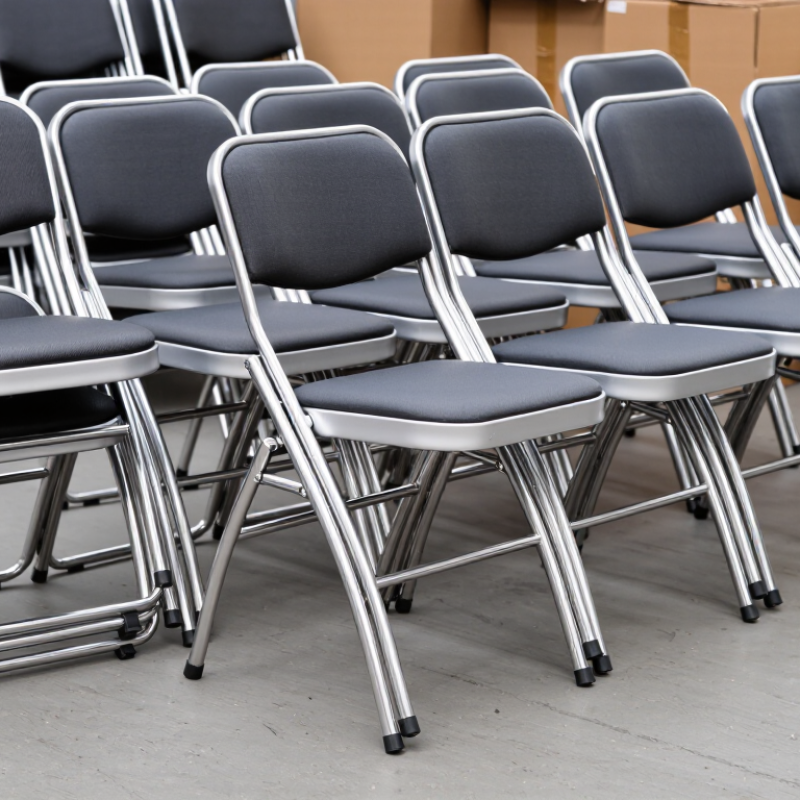
Metal foldable chairs are portable seating products built around a hinged metal frame. Their main parts include a seat, backrest, cross braces, locking joints, and protective feet. Steel supports heavier commercial use, while aluminum reduces lifting weight. Powder coating can improve surface resistance, but it cannot prevent every scratch.

The structure matters more than appearance. A dependable chair should open smoothly, lock firmly, and close without trapping fingers. Rounded edges help during repeated handling. Non-slip feet protect indoor floors and reduce movement on smooth surfaces. ANSI/BIFMA seating standards provide useful test references for stability, strength, and durability. Wholesale buyers should request test records, load ratings, hinge-cycle results, and corrosion details. Small omissions become expensive later.

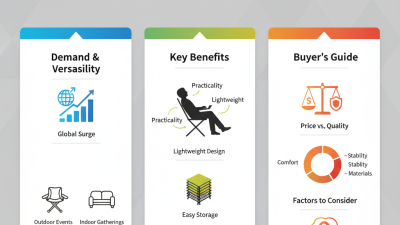
Grand View Research estimates the global folding furniture market reached approximately USD 3.9 billion in 2023, with continued growth expected through 2030. This trend reflects demand from event venues, schools, training rooms, community halls, and temporary dining spaces. In practice, a chair used for weekend events needs different reinforcement from one used daily in a school. Carton size also affects warehouse costs and freight efficiency. A low unit price can still be a poor decision. I would compare welded joints, replacement-foot availability, folded thickness, and inspection consistency before approving a large order. Some suppliers provide attractive samples, yet production batches may vary. That risk deserves attention.
2026 Best Metal Foldable Chairs for Wholesale Buyers

Typical static load-rating benchmarks by main application. Metal foldable chairs generally use a tubular steel frame, folding hinges, a molded seat and back, and protective feet.

Event and banquet models commonly fall around 100–120 kg, training and classroom models around 120–150 kg, and heavy-duty public or outdoor models around 150–180 kg. These are typical non-branded commercial specification ranges; wholesale buyers should confirm the tested load rating, frame gauge, hinge design, coating, and applicable safety standards with each supplier.

Key Features Wholesale Buyers Should Evaluate in 2026

2026 Best Metal Foldable Chairs for Wholesale Buyers

Wholesale buyers should evaluate more than price and appearance when selecting metal foldable chairs. Frame thickness, weld quality, and joint alignment affect long-term reliability. Inspect sample chairs with a ruler and flashlight. Uneven welds, sharp edges, or loose rivets deserve attention.

A practical chair should fold smoothly without pinching fingers or scraping the floor. Check the locking mechanism repeatedly, not just once. Test weight capacity with controlled loading and examine movement afterward. Powder-coated surfaces usually resist scratches better, but coating quality can still vary. Seat height, folded thickness, and handle design also influence storage costs. A compact stack can save valuable warehouse space. However, a lighter frame is not always the better choice. It may feel unstable on uneven floors.

Tips: Request production samples before placing a bulk order. Measure cartons, protective padding, and actual folded dimensions. Ask for material specifications, inspection records, and clear replacement terms. In my experience, packaging is often overlooked. A strong chair can still arrive with bent legs after poor carton protection. Buyers should also compare noise during opening and closing. This small detail matters in training rooms, halls, and rental operations. Recheck every assumption. Specification sheets rarely show the whole product.

Types of Metal Foldable Chairs for Different Commercial Uses

For wholesale buyers, metal foldable chairs should match the commercial setting, not only the lowest price. Banquet chairs suit wedding halls, conference rooms, and training centers. They usually need padded seats, stable backrests, and a protective finish for repeated handling.

Slim steel folding chairs work well in schools, community halls, and temporary event spaces. Their lighter frames simplify storage and daily setup. Outdoor venues need corrosion-resistant metal, drainage-friendly seats, and stronger joints. However, no finish remains perfect under constant moisture and rough transport.

High-capacity venues may prefer heavy-duty folding chairs with reinforced frames and wider seats. These are useful for examination rooms, worship spaces, and public meeting areas.

For cafeterias or flexible offices, nesting designs can reduce storage pressure. Check the folded thickness carefully. A few millimeters can affect an entire storage rack.

From a quality-control perspective, buyers should inspect welds, hinge movement, leg caps, and locking systems before placing large orders. A chair can look strong but still wobble on uneven flooring.

Tips: Request samples from every proposed production batch. Test folding cycles, seat loading, and stacking stability. Measure packed cartons, not just individual chairs. Confirm replacement parts and finish consistency in writing.

I have seen buyers overlook carton strength, then receive scratched frames after transport. That mistake is expensive. Also, specifications sometimes ignore real users. Children, older adults, and staff carrying equipment may need different seat heights and handling features. A small trial order can reveal problems that a catalog cannot.

How to Compare Suppliers, Prices, Quality, and Minimum Order Quantities

For wholesale buyers, supplier comparison should begin with evidence, not catalog photos. The global folding furniture market is projected to grow at about 6% annually through 2030, according to Grand View Research. This growth attracts new factories, but quality can vary sharply. Request production records, material specifications, and recent inspection reports. A reliable supplier should identify steel grade, tube thickness, weld method, coating type, and tested load capacity. Ask for a sample. Sit on it, fold it repeatedly, and inspect hinge movement after transport.

Price comparisons must include landed cost. Calculate chair price, packaging, inland freight, ocean freight, duties, spare parts, and defect allowances. A lower quotation may hide thinner tubing or weaker rivets. ASTM and EN seating standards provide useful testing references, although buyers should confirm the exact market requirement. MOQ also needs careful review. A factory quoting 500 units may charge more for custom colors, cartons, or logos. Another supplier may accept 100 units, but with higher unit pricing and slower production. Both options can be reasonable. I once focused too heavily on the cheapest offer. That was not efficient.

Use a comparison sheet with at least five columns: sample quality, price, MOQ, lead time, and warranty response. Record measurements, not impressions. Check whether quoted strength applies to static loading or repeated-use testing. Request a pre-shipment inspection before balance payment.

Small details matter. A bent carton can damage chair frames. Supplier reliability is never proven by promises alone.

Wholesale Buying, Inspection, Storage, and Maintenance Guidelines

Wholesale buyers should inspect metal foldable chairs before approving the full order. Request production samples, material specifications, weld photographs, and load-test records. BIFMA safety standards emphasize stability, strength, and durability testing for commercial seating. Use these criteria during supplier audits. Do not rely on appearance alone.

ISO 2859-1 offers an acceptance-sampling framework for incoming goods. Set a defined inspection level and record defects by carton, batch, and chair position. Check loose rivets, sharp weld edges, uneven legs, paint bubbles, and locking mechanisms. The U.S. Consumer Product Safety Commission’s annual injury data repeatedly shows that falls remain a major household injury category, so stability deserves careful attention. A chair that wobbles on a warehouse floor is not a minor cosmetic problem.

Storage also affects wholesale quality. Keep chairs indoors, dry, and away from concrete moisture. Stack them according to the supplier’s tested limit, not the tallest possible pile. Leave clear aisles for forklifts and manual handling. OSHA warehousing guidance stresses unobstructed aisles and stable stored materials. Use cardboard separators when painted frames rub together. Before shipment, open a few random cartons again; repeated folding can expose hidden hinge weakness. Some buyers skip this step under time pressure. That decision may prove expensive. Clean metal surfaces with mild detergent, then dry them fully. Avoid abrasive pads and chlorine-based chemicals, which can damage protective coatings. Maintenance records should include inspection dates, defect photos, corrective actions, and the responsible worker’s name.

2026 Best Metal Foldable Chairs for Wholesale Buyers - Wholesale Buying, Inspection, Storage, and Maintenance Guidelines

Chair Configuration Frame Material and Finish Open Dimensions
(W × D × H)
Seat Height Folded Thickness Approx. Chair Weight Suggested Static Load Target Suitable Wholesale Applications Key Pre-Shipment Inspection Points Storage and Maintenance Guidance
Standard steel folding chair Round or oval carbon-steel tubing; powder-coated surface 45 × 51 × 82 cm 45 cm 8–10 cm 4.0–5.0 kg 110 kg minimum Training rooms, community halls, temporary seating, schools Check weld continuity, hinge alignment, automatic locking action, leg stability, sharp edges, and coating coverage. Store indoors on a dry, level surface. Wipe with mild detergent and dry completely before stacking.
Padded steel folding chair Powder-coated steel frame; upholstered seat and backrest 45 × 55 × 85 cm 45 cm 13–16 cm 5.0–6.5 kg 110 kg minimum Banquets, conference venues, worship spaces, indoor events Inspect seam quality, foam recovery, fabric attachment, frame welds, hinge pin retention, and floor-contact points. Keep away from moisture and direct sunlight. Vacuum fabric regularly and use a suitable upholstery cleaner for stains.
Contoured back folding chair Steel tube frame; molded polymer or resin back and seat 46 × 54 × 84 cm 45 cm 11–14 cm 4.5–6.0 kg 110–136 kg Long meetings, classrooms, visitor seating, multipurpose facilities Check seat-to-frame fastening, polymer cracks, backrest flex, folding clearance, and consistent leg contact. Clean non-abrasively. Do not drag loaded stacks; inspect plastic components after exposure to extreme temperatures.
Heavy-duty folding chair Reinforced steel tubing; corrosion-resistant powder coating 47 × 55 × 86 cm 45–46 cm 10–13 cm 6.0–7.5 kg 136 kg minimum High-frequency rental use, public venues, assembly areas, commercial facilities Verify tube wall consistency, reinforcement plates, load-test records, joint tightness, and absence of frame deformation. Use stable vertical or horizontal racks. Touch up damaged coating promptly after removing rust and fully drying the surface.
Mesh-seat metal folding chair Powder-coated steel frame; perforated or expanded-metal seat 45 × 52 × 82 cm 45 cm 9–12 cm 4.5–6.0 kg 110 kg minimum Cafeterias, workshops, covered outdoor areas, utility seating Inspect mesh edges for burrs, drain openings, welds, coating adhesion, and contact-point protection. Avoid prolonged rain or salt exposure unless specifically designed for it. Keep mesh clear of debris and dry after washing.
Writing-tablet folding chair Steel frame; compact laminate or molded writing tablet 56 × 70 × 82 cm 45 cm 18–24 cm 6.5–8.5 kg 110 kg chair load; 15 kg tablet load Training centers, lecture rooms, examination spaces, seminars Test tablet locking, hinge clearance, writing-surface flatness, fastener torque, frame balance, and edge finishing. Store with tablets folded or protected from impact. Do not place heavy cartons on the writing surfaces.
Outdoor-use metal folding chair Galvanized or corrosion-resistant steel; exterior-grade coating 45 × 53 × 83 cm 45 cm 9–12 cm 4.5–6.5 kg 110 kg minimum Covered patios, outdoor ceremonies, temporary event seating Check galvanizing or coating uniformity, drainage, corrosion at joints, UV-resistant feet, and hardware condition. Rinse salt, dust, and organic residue regularly. Dry before folding and store under cover whenever possible.
Compact transport folding chair Light-gauge steel or aluminum-steel combination; powder-coated finish 43 × 48 × 79 cm 44–45 cm 6–9 cm 3.0–4.5 kg 100–110 kg Mobile events, transport services, small venues, emergency or overflow seating Confirm weight, fold dimensions, locking mechanism, repeated-cycle performance, and secure packaging protection. Use padded carts or protective separators. Avoid overloading stacks and lubricate metal pivots lightly when movement becomes stiff.
Wholesale buying note: Dimensions, weights, and load targets are typical procurement specifications for commercial metal folding chairs. Buyers should confirm the final product drawing, applicable local safety requirements, test method, packaging configuration, and written load rating before placing a bulk order.