7 Best Quality Gypsum Board Brands for Global Buyers
Choosing the Best Quality Gypsum Board is not simply a matter of comparing brand names. Global buyers must examine strength, moisture resistance, fire performance, surface finish, and supply reliability. A board that performs well in a dry office may fail in a humid coastal project. That difference matters.
Building-science expert Joseph Lstiburek has stated, “The building enclosure is a system, not a collection of products.” His observation is highly relevant to gypsum board selection. Panels must work with framing, insulation, joint compounds, fasteners, coatings, and local installation practices. A premium board cannot correct poor storage or careless installation.
This guide reviews seven widely recognized gypsum board brands for international buyers. It considers product consistency, technical certifications, regional availability, application range, and manufacturer support. The comparison includes standard wallboard, moisture-resistant panels, fire-rated boards, impact-resistant products, and specialty systems.
Details matter.
Buyers should verify current certifications and local code acceptance before placing large orders. Product names and specifications can vary between countries, even within the same brand. Transport conditions also deserve attention. Damaged edges, wet packaging, and long warehouse exposure can reduce performance before installation begins.
No ranking is permanently universal. Project climate, building type, budget, and installer skill can change the best choice. That is an important limitation. Still, practical comparisons can reduce purchasing risks and reveal which manufacturers consistently deliver dependable boards at scale.
The following brands deserve close attention from contractors, distributors, developers, and sourcing teams seeking reliable gypsum board solutions worldwide.
What Defines a High-Quality Gypsum Board Brand
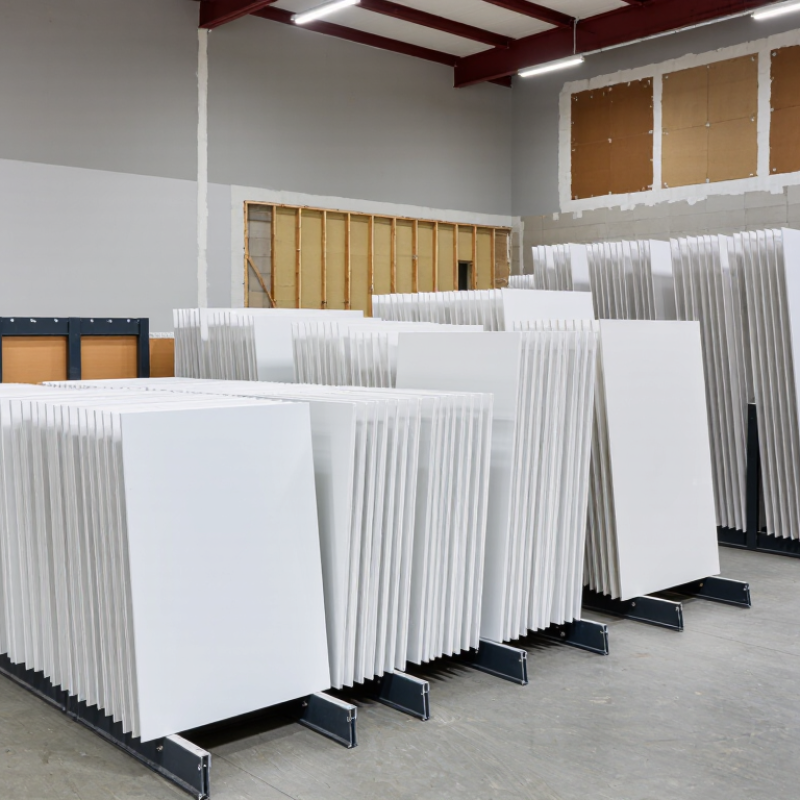
A high-quality gypsum board brand begins with consistent raw materials and disciplined manufacturing. The gypsum core should be dense, evenly mixed, and free from visible lumps. Paper faces must bond tightly to the core. Edges should remain square after cutting, not crumble under light hand pressure. On a real jobsite, these details affect joint quality, waste, and installation speed.
Reliable manufacturers publish measurable data, not vague claims. Buyers should check flexural strength, moisture resistance, fire performance, sound ratings, and dimensional tolerances. Independent laboratory reports add credibility when they match the delivered product. Batch numbers, production dates, and traceable test records also matter. They help contractors investigate failures instead of guessing.
Site experience reveals problems that brochures may hide. I have seen boards bow after poor storage, even when the specification looked excellent. That is not always a factory fault, but the supplier should provide clear handling guidance and technical support. Packaging should protect corners during long-distance transport. Technical staff should answer practical questions about framing, fasteners, joints, and humid rooms. No board is perfect. A trustworthy supplier admits limitations and explains where a product should not be used. That honesty often signals stronger expertise than impressive advertising.
Key Criteria for Comparing Global Gypsum Board Manufacturers
Global gypsum board buyers should compare manufacturers through measurable evidence, not attractive catalogs. Product consistency matters across every shipment. Request technical data for thickness, density, bending strength, moisture resistance, and fire performance. Check whether test results come from accredited laboratories and match the supplied product.
Production control deserves close attention. Ask about raw gypsum sources, paper liner quality, calibration systems, and batch inspection records. A reliable factory should explain how it handles warped sheets, damaged edges, and dimensional variation. Small defects can create visible joints and costly installation delays. Sample several batches, not just one.
Certifications must fit the destination market. Confirm current documents, testing standards, labeling rules, and declared performance values with qualified local professionals. Environmental data also matters, including recycled content, emissions, packaging, and waste management. Delivery capability is another practical test: review lead times, pallet protection, container loading, and claim procedures. A responsive technical team can solve problems faster than a low quotation.
Price still matters, but it should be compared per usable square meter. I would also examine warranty language carefully. Some terms look reassuring yet exclude moisture exposure, storage mistakes, or installation conditions. That is an easy detail to miss. Factory audits, reference projects, and independent inspections provide stronger confidence than promises alone. However, even a careful assessment has limits; climate, installer skill, and transport conditions can change field performance.
Gypsum Board Types and Applications by Brand
Global buyers usually compare gypsum board by performance, not appearance alone. Established manufacturers offer standard, moisture-resistant, fire-rated, acoustic, and impact-resistant boards. Each type serves a different building condition.
Standard boards suit bedrooms, offices, and dry corridors with stable indoor humidity. Moisture-resistant boards work better in kitchens, bathrooms, and laundry areas. They still need proper ventilation and sealing. Fire-rated boards contain reinforced gypsum cores for protected walls, ceilings, and service shafts. Acoustic boards use denser cores or special surfaces to reduce speech and equipment noise. Impact-resistant boards are useful in schools, hospitals, warehouses, and busy stairwells.
In site inspections, I have found that installation often affects performance more than the product label. Incorrect screw spacing can cause cracks around joints. Poorly sealed penetrations may weaken fire or acoustic protection. This detail matters. Buyers should check thickness, edge profile, test standards, and compatible joint compounds before ordering. Climate also changes the decision; coastal projects may need stronger moisture control during storage and installation. A board rated for wet areas is not automatically waterproof. That assumption can become expensive.
Reliable suppliers normally provide technical datasheets, batch information, installation guidance, and documented test results. Still, documents require careful reading. Some ratings apply only to complete wall systems, not loose boards. A small sample installation can reveal sagging, dust, or difficult cutting before a large shipment arrives. I would also confirm pallet protection, delivery conditions, and local installer experience, because a high-quality board can perform poorly when handled carelessly.
How Global Buyers Can Select the Right Gypsum Board Supplier
Global buyers need more than a low gypsum board price. The right supplier must match local building codes, project conditions, and delivery requirements. I usually begin with technical documents, including fire ratings, moisture resistance data, density, thickness tolerance, and test dates. A reliable supplier shares complete reports without avoiding difficult questions.
Request physical samples before placing a large order. Check the board edges, paper adhesion, surface flatness, and screw holding strength. A sample should survive ordinary handling. Test it in the actual climate when possible. Humid storage can damage boards before installation. I once inspected a shipment with acceptable laboratory results but weak corner protection. Several sheets arrived chipped. The supplier corrected the packaging, but the delay still affected the project.
Factory experience also matters. Ask about monthly capacity, quality-control steps, raw material sources, and inspection records. A video call helps, but an independent factory audit provides stronger evidence. Confirm pallet dimensions, container loading methods, labeling, and replacement procedures in writing. Delivery promises can sound precise and remain vague. Check production lead times during peak construction seasons. Communication quality is a practical warning sign. If technical replies arrive late or contradict earlier documents, reconsider the partnership. Compare at least three suppliers using the same specifications, payment terms, warranty language, and shipping conditions. Small gaps often become expensive problems.