
Leave Your Message

2026 Best Folding Leisure Chair for Camping and Travel

A campsite chair should feel dependable before the first cup of coffee, not just look impressive online. The right Folding Leisure Chair opens smoothly, sits firmly on uneven ground, and folds away without a wrestling match. Small details matter: a wide seat, secure joints, breathable fabric, and a carry bag that does not snag on every zipper. No chair is perfect. A lighter frame may feel less substantial, while extra padding can add bulk to a travel bag.

Industrial designer Dieter Rams offered a useful design principle: “Good design is as little design as possible.” It is not a folding-chair specification, but it offers a practical lens: every feature should earn its weight. For this 2026 guide, we focus on comfort, portability, frame stability, materials, and ease of care. We also distinguish useful extras from features that look better in a product photo than at a windy lakeside campsite. Details count.

Expect trade-offs, not magic. A compact model may suit train travel but feel cramped during a long evening outdoors. A wider chair may be comfortable beside a tent and awkward in a crowded car trunk. The best choice depends on your body, destination, and packing space. Our comparisons aim to make those decisions clearer, while recognizing that comfort is personal. A chair that works beautifully for one camper may disappoint another. Before buying, check the dimensions and weight—and, when possible, try the seat yourself.
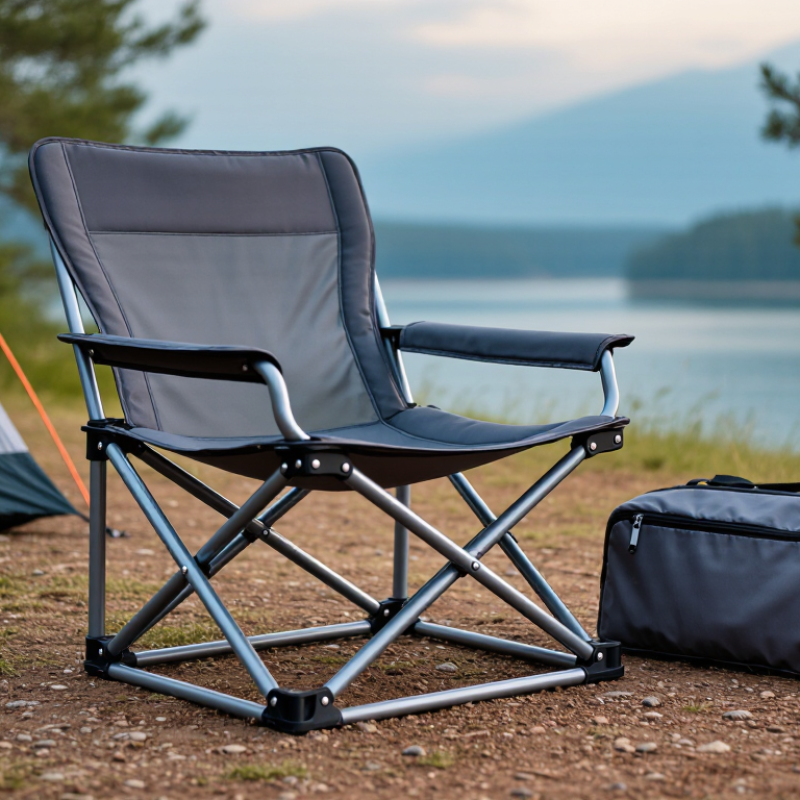
2026 Best Folding Leisure Chair for Camping and Travel

What Defines a Folding Leisure Chair for Camping and Travel

A folding leisure chair for camping and travel should balance easy carrying with dependable support. The Outdoor Foundation’s 2024 Outdoor Participation Trends Report estimates that 175.8 million Americans aged six and older took part in outdoor recreation in 2023. That figure describes participation, not chair sales, but it highlights how varied outdoor settings can be. A chair may move from a gravel campsite to a picnic lawn, then ride in a crowded car trunk. Compact folding matters. So does a frame that opens without pinching fingers or wobbling on uneven ground.

Weight is only one part of portability. Check the folded dimensions, carry handle, fabric tension, and whether the feet stay stable on soft soil. A broad seat can feel comfortable, until it crowds a small tent. The U.S. Bureau of Economic Analysis reported that outdoor recreation generated $639.5 billion in value added in 2023, or 2.3 percent of U.S. GDP. That economic measure does not prove any chair is durable; construction and safety claims still need direct evidence. Look for clear load limits, reinforced joints, and materials that dry after light rain. Small details matter. A cup holder is convenient, but it cannot compensate for a frame that twists. I would also question chairs that promise both minimal weight and heavy-duty strength without explaining their trade-offs.

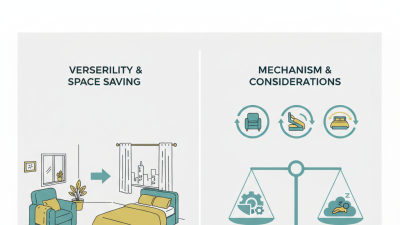
How to Assess Comfort, Weight, Capacity, and Durability

Comfort is more than a padded seat. Check the seat width, back height, and sitting angle against your body and usual clothing. If possible, sit in a similar chair for ten minutes; pressure behind the knees or a low backrest may become obvious. Small details matter. Look for fabric that feels breathable, plus armrests that support your elbows without forcing your shoulders upward. A soft seat can still sag, so comfort should be judged alongside frame support.

Weight and capacity affect how practical a chair feels on a trip. Compare the folded weight with the distance you expect to carry it, and check whether a carry strap is included. A few extra pounds can matter on a long walk. For capacity, use the manufacturer’s stated limit as a ceiling, not a reason to guess. Check that the feet sit evenly on firm ground, and avoid sudden leaning or bouncing. Uneven soil can make even a sturdy chair feel unstable.

Durability depends on the whole construction. Inspect stitching at corners, reinforced stress points, frame joints, and feet that resist wear. Smooth hinges should open without pinching or wobbling. Aluminum frames are often lighter; steel can feel sturdier but may add weight. Neither material guarantees long service. After a damp outing, let the chair dry fully before storage, and check for loose fasteners or small fabric tears. I would not treat one quick showroom test as proof of lasting comfort; real use can reveal flaws that are easy to miss.

2026 Best Folding Leisure Chair for Camping and Travel - How to Assess Comfort, Weight, Capacity, and Durability

Use these practical screening benchmarks to compare folding leisure chairs. They are selection guidelines, not specifications for a particular chair; always check the manufacturer’s stated limits and packed dimensions.

Assessment dimension What to check Practical screening benchmark Why it matters
Seat comfort Seat width, seat depth, back support, and fabric tension For a general-purpose chair, look for a seat about 20 in (51 cm) or wider; try sitting in it if possible. Fit and support vary by body size and posture. A published width alone cannot establish comfort.
Seat height Distance from the ground to the seat surface Compare the listed height with your preferred sitting and standing position; lower seats are generally closer to the ground. Seat height affects how easily you can sit down and stand up, and how the chair feels at a table or campfire.
Carry weight Chair weight, including any carry bag if its weight is listed separately Under 5 lb (2.3 kg) is a useful target for frequent carrying; heavier chairs may suit car camping better. The packed weight matters when carrying the chair over a distance or fitting it into a travel load.
Packed size Folded length and packed dimensions Measure your storage space and compare it with the chair’s published packed dimensions before buying. “Folding” does not guarantee that a chair will fit in a particular vehicle, bag, or luggage compartment.
Rated capacity The manufacturer’s stated maximum user weight and any use restrictions Choose a chair whose stated capacity exceeds the user’s weight; do not treat an unverified estimate as a tested rating. Capacity is a product-specific limit. Follow the manufacturer’s instructions and avoid exceeding it.
Frame construction Frame material, joints, fasteners, and visible welds or connections Look for a frame with clearly specified materials and securely assembled joints; inspect for looseness, cracks, or sharp edges. Material alone does not establish strength or service life; the overall design and construction also matter.
Fabric and stitching Fabric specification, seam quality, and reinforcement at high-stress areas Check seat corners, seams, and attachment points for even stitching and reinforcement; follow care instructions after wet or dirty use. Wear often appears at seams and attachment points. Fabric labels alone do not guarantee durability.
Stability Foot design, frame spread, and movement on the intended surface Set the chair on level ground and check that all feet contact the surface and the frame does not rock under normal seated movement. Soft, uneven, or sloped ground can reduce stability; use the chair only as directed.
Setup and storage Opening and folding steps, locking mechanisms, and whether the chair packs into its bag Practice opening and folding the chair once before travel; confirm that locks engage and fabric is not trapped in the frame. A simple, repeatable folding process makes setup easier and helps reduce accidental pinching or damage.
Overall fit Comfort, carry weight, capacity, packed size, and intended use considered together Prioritize capacity and safe fit first, then choose the lightest chair that remains comfortable and fits your storage needs. A chair that is easy to carry is not necessarily the most comfortable choice for long periods of sitting.

Which Chair Features Suit Different Camping and Travel Needs

A good folding leisure chair should fit the trip, not just look comfortable at home. For car camping, a wider seat, supportive back, and sturdy frame can make long evenings by the fire easier. Check the chair’s weight limit and packed dimensions, too; a bulky model may be frustrating when the trunk is already full. For hiking or train travel, prioritize low weight and a compact carry bag. Comfort still matters. A very low seat can be awkward on uneven ground, while a tall frame may feel unstable on soft soil.

Fabric and small details shape daily use. Quick-drying material helps after a damp morning, and mesh panels can improve airflow in warm weather. Armrests are useful for relaxing, but they add bulk and may snag during packing. Look for feet that sit securely on grass or packed dirt. No chair suits every surface. I sometimes overvalue extra padding, then notice how much space it takes up.

Tips: Open and close the chair at home before your trip, and check that each locking joint sits firmly. Place it on level ground, away from slopes and loose edges. Pack it where you can reach it without unpacking everything. A few minutes of checking can prevent a wobbly seat later.

How to Compare the Best Folding Leisure Chairs of 2026

How to Compare the Best Folding Leisure Chairs of 2026

The best folding leisure chair depends on where and how you use it. For camping, compare packed size, weight, and setup time. A chair that fits beside your tent may feel cramped after an hour, so check seat width and depth, not just the listed weight limit. Measure your usual storage space, too.

Look at frame joints, fabric tension, and foot design. Wide feet can sink less into soft ground, while a taller seat may be easier to get out of. Check the manufacturer’s load rating and care instructions; these offer more useful guidance than appearance alone. Mesh can feel cooler, but it may be less comfortable on a chilly evening. Details matter.

Tips: Test the chair on uneven ground if possible. Open and fold it several times, then check for pinching points and loose joints. A few extra seconds to pack it away may be worth it. Still, comfort is personal, and I would not trust a single quick test to predict a whole weekend’s use.

How to Set Up, Maintain, and Store a Folding Chair

At camp, unfold the chair on firm, level ground rather than loose stones or a sloping patch. Open the frame until each locking joint sits fully in place, and keep fingers clear of hinges. Check that the fabric is not twisted and that every leg touches the ground. Give the seat a gentle downward press before sitting. It should feel stable. Never force a stiff joint; check for trapped fabric or grit, and follow the chair’s stated weight limit.

After a trip, brush off sand and dried mud before they work into the hinges. Wipe the fabric with mild soap and a damp cloth, then let it dry completely in the shade. Sunlight can fade fabric over time, while packing a damp chair may encourage mildew. A quick rinse may seem easier, but it can leave dirt inside the frame. Check seams, feet, and locks for wear. Small cracks are easy to miss.

To fold the chair, release its locks as directed and bring the frame together without pulling sharply on the fabric. Store it in its carry bag in a cool, dry place, away from sharp tools and heavy gear. Avoid leaving it compressed beneath a packed trunk load for months; that can strain fabric and joints. A chair can look ready after a wet weekend and still feel damp at the seams. Check before storing.

2026 Best Folding Leisure Chair for Camping and Travel

How to Set Up, Maintain, and Store a Folding Chair

These approximate task times are practical planning estimates, not product test results. Follow your chair’s instructions, let fabric dry fully before storage, and check the frame and joints regularly.