Leave Your Message
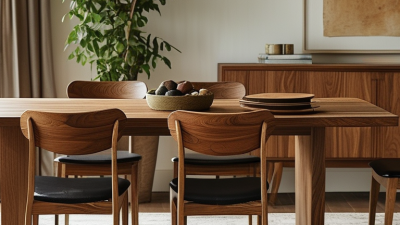
China’s furniture industry has become a serious sourcing destination for Solid Mango Wood Dining Chairs. Yet factory selection requires more than attractive photographs and competitive quotations. A reliable manufacturer should show consistent timber grading, controlled moisture levels, strong joinery, and clear finishing procedures. These details matter when a chair faces daily meals, moving children, spilled drinks, and years of humid weather.
William Morris, the influential British designer and craftsman, said, “Have nothing in your houses that you do not know to be useful, or believe to be beautiful.” That principle remains useful here. A well-made mango wood chair should feel stable beneath the hands, sit evenly on the floor, and display natural grain without excessive filler or artificial uniformity. Its beauty should support practical living, not conceal weak construction.
This guide examines China’s top 10 Solid Mango Wood Dining Chairs manufacturers through a buyer-focused lens. The comparison considers production experience, kiln-drying control, mortise-and-tenon or reinforced joinery, surface finishing, customization ability, export service, and quality inspection. Product certifications and factory claims still deserve verification. They are not automatic proof of superior workmanship.
No ranking is completely perfect. A factory may produce excellent samples yet struggle during larger orders. Another may offer modest branding but maintain dependable quality. That difference can affect delivery schedules, replacement rates, and long-term costs. Buyers should request recent workshop videos, material specifications, inspection records, and physical samples before signing contracts. The strongest choice is not always the largest supplier. It is the manufacturer whose process remains dependable when real-world conditions become less tidy.
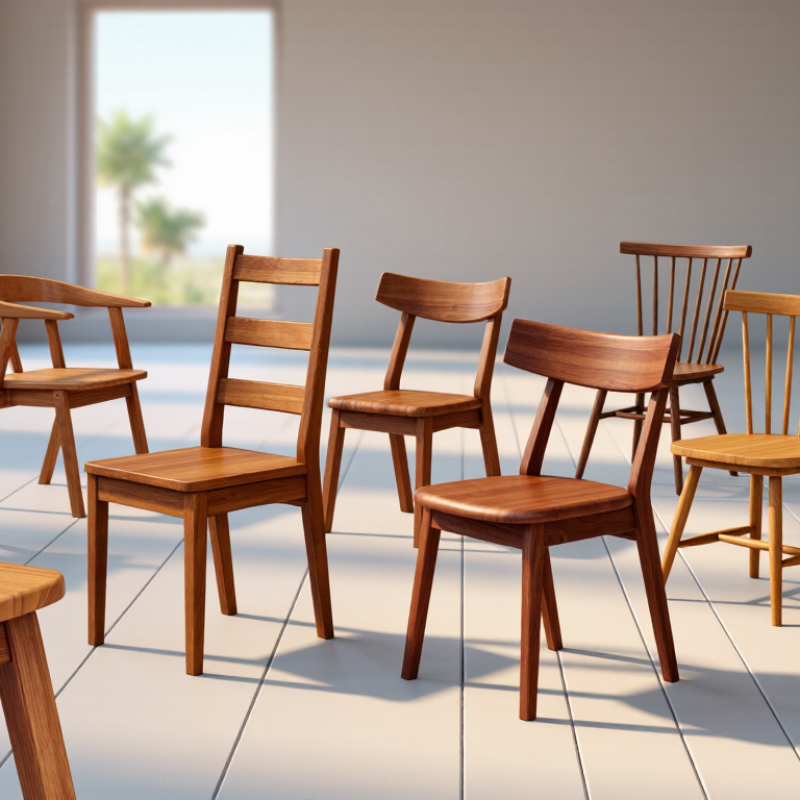
China Top 10 Solid Mango Wood Dining Chairs Manufacturers?
Definition and Features of Solid Mango Wood Dining Chairs
Solid mango wood dining chairs are built from natural mango lumber, not veneer over plywood or a hollow composite core. Mango trees often enter furniture production after fruit yields decline. FAOSTAT recorded more than 58 million tonnes of mangoes, mangosteens, and guavas in 2022, although this figure does not measure available furniture wood.
The material has a warm brown tone, visible grain, and occasional dark streaks. Each chair can look slightly different. That is normal. Mango wood is moderately dense and can support daily dining use when properly kiln-dried. Moisture control matters, because wood expands and contracts with humidity. Loose joints, rough edges, or deep drying cracks deserve attention. A smooth seat edge should feel comfortable against the legs.
The FAO Global Forest Resources Assessment 2020 reports 4.06 billion hectares of forest worldwide. This makes responsible sourcing more than a marketing phrase. Manufacturers should document timber origin, drying methods, adhesives, finishes, and structural testing. Look for reinforced corner joints and stable leg connections. A durable finish should resist ordinary spills without hiding the grain completely. “Solid wood” still needs clarification; some products contain solid parts with engineered panels. That detail is easy to miss. In practical inspections, visual beauty often receives too much attention, while seat height and joint strength receive too little. A careful China supplier comparison should examine samples, moisture records, load-test evidence, and packaging protection before ranking manufacturers.
Anonymous manufacturing profiles and practical specification benchmarks for solid mango wood dining chairs
| No. | Anonymous Manufacturer Profile | Solid Mango Wood Definition | Typical Chair Dimensions | Recommended Moisture Content | Common Joinery | Surface Finish | Indicative Static Load | Key Quality Checks |
|---|---|---|---|---|---|---|---|---|
| 01 | Profile A: Classic Solid-Wood Chair | Chair components are made from solid mango timber rather than veneer-covered fiberboard or particleboard. | W 450–500 × D 500–550 × H 820–900 mm; seat height 450–480 mm | 8–12% for indoor furniture | Mortise-and-tenon joints with reinforced corner blocks | Water-based lacquer, natural oil, or low-sheen varnish | 100–120 kg under static testing | Moisture reading, joint stability, level feet, sanding quality, coating consistency |
| 02 | Profile B: Upholstered Dining Chair | A solid mango wood frame supports a separately attached upholstered seat or backrest. | W 470–520 × D 520–570 × H 820–920 mm; seat height 460–490 mm | 8–12% for the wood frame | Dowels, glued rails, screws, and concealed frame blocks | Clear protective lacquer with fabric, leather, or synthetic upholstery | 100–120 kg under static testing | Foam recovery, seam quality, fabric attachment, frame alignment, wobble test |
| 03 | Profile C: Rustic Reclaimed-Look Chair | Solid mango wood is intentionally finished to show knots, grain variation, and natural color differences. | W 450–510 × D 500–560 × H 820–900 mm; seat height 450–480 mm | 8–12% for stable indoor use | Traditional mortise-and-tenon or dowel construction | Hand-distressed stain, wax, or matte clear coat | 100–120 kg under static testing | Controlled distressing, absence of structural cracks, smooth edges, finish adhesion |
| 04 | Profile D: Contemporary Minimalist Chair | The visible frame, legs, and structural rails use solid mango wood with clean, simple profiles. | W 440–490 × D 490–540 × H 800–880 mm; seat height 450–480 mm | 8–10% preferred for climate-controlled interiors | Precision dowels, concealed screws, and glued rail connections | Transparent matte lacquer or natural oil | 100–120 kg under static testing | Dimensional accuracy, consistent gaps, flush joints, edge radius, color uniformity |
| 05 | Profile E: Carved-Detail Chair | Solid mango wood is shaped or carved to create decorative backrests, legs, or apron details. | W 450–520 × D 500–570 × H 850–950 mm; seat height 450–480 mm | 8–12% for indoor applications | Mortise-and-tenon joints supplemented by dowels where required | Hand-applied stain, wax, or protective lacquer | 100–120 kg under static testing | Carving symmetry, detail definition, sanding in recesses, joint strength, coating coverage |
| 06 | Profile F: Bent-Back Comfort Chair | A solid mango wood base is combined with a shaped or curved backrest for improved seating comfort. | W 460–510 × D 510–560 × H 800–900 mm; seat height 450–480 mm | 8–10% preferred before final assembly | Dowel, tenon, and reinforced backrest connections | Natural oil or durable clear lacquer | 100–120 kg under static testing | Backrest angle, flex resistance, smooth contact areas, joint durability, chair balance |
| 07 | Profile G: Mixed-Material Dining Chair | The load-bearing structure is solid mango wood, combined with metal, cane, plywood upholstery panels, or fabric. | W 450–520 × D 500–570 × H 800–920 mm; seat height 450–490 mm | 8–12% for wood components | Mechanical fasteners, dowels, glued joints, and metal brackets | Clear coat or stain on wood; powder coating or textile finish on other materials | 100–120 kg under static testing | Material compatibility, fastener torque, corrosion resistance, edge safety, load transfer |
| 08 | Profile H: Stackable Commercial Chair | Solid mango wood is engineered into a compact frame designed for repeated handling and storage. | W 430–480 × D 480–530 × H 780–880 mm; seat height 450–480 mm | 8–10% for frequent indoor handling | Reinforced dowels, tenons, and concealed screws | Commercial-grade lacquer or abrasion-resistant varnish | 100–120 kg under static testing | Stacking clearance, repeated-use testing, fastener retention, abrasion resistance, floor protection |
| 09 | Profile I: Export-Focused Flat-Pack Chair | Solid mango wood parts are precision-machined for knock-down assembly and space-efficient shipping. | W 440–500 × D 490–550 × H 800–900 mm; seat height 450–480 mm | 8–12%, depending on destination climate | Bolts, threaded inserts, dowels, and replaceable corner blocks | Protective lacquer or oil with sealed end grain | 100–120 kg after assembly | Assembly instructions, hardware completeness, carton protection, dimensional accuracy, stability |
| 10 | Profile J: Premium Custom-Order Chair | Solid mango wood is selected, graded, and customized for specific dimensions, colors, upholstery, or design details. | W 450–550 × D 500–600 × H 800–950 mm; seat height 450–490 mm | 8–10% for controlled indoor environments | Engineered mortise-and-tenon joints, dowels, and concealed reinforcement | Custom stain, oil, lacquer, wax, or multi-layer protective coating | 100–120 kg under static testing | Approved sample matching, timber grading, color consistency, structural testing, final inspection |