
Leave Your Message

7 Tips for Choosing a Solid Wood Kitchen Table and 4 Chairs

A Solid Wood Kitchen Table And 4 Chairs can become the busiest spot in a home. It holds weekday breakfasts, homework, grocery bags, and the occasional mug left behind. Solid wood brings visible grain and a reassuring weight, but quality depends on more than appearance. Wood species, joinery, finish, and construction all affect how a dining set feels and wears over time.

Choosing well takes a little inspection. Look closely at how the legs meet the apron, whether the chairs feel steady, and how the tabletop is sealed. Run a hand over the edges. Notice any wobble. A beautiful table may still be awkward if its chairs crowd the room or its finish marks easily. Measurements matter, too: allow enough space to pull chairs back without blocking a doorway. Small details are easy to miss in a showroom. They can matter every day at home.

This guide shares seven practical tips for comparing a solid wood table-and-chair set, from checking materials to assessing comfort and care needs. It also considers the four chairs as part of the purchase, not an afterthought. Sit in them for a few minutes if possible. Check seat height against the table, and consider how the set will handle your household’s routines. No finish is immune to wear, and personal taste can change. A careful choice cannot prevent every scratch, but it can help you buy a set that suits your space, habits, and budget.
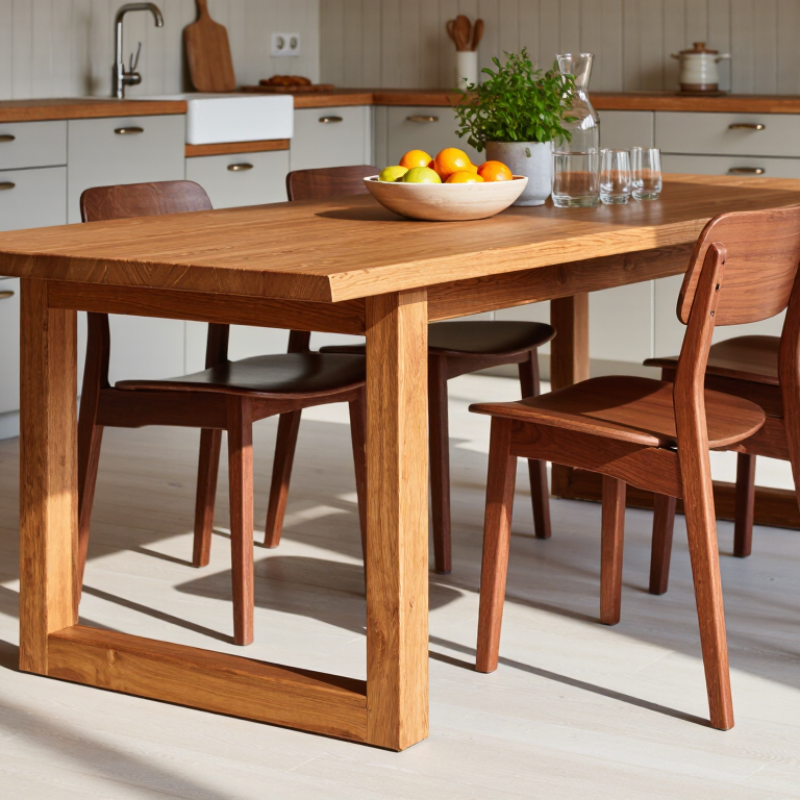
7 Tips for Choosing a Solid Wood Kitchen Table and 4 Chairs

Assess Your Kitchen Space and Table Size

Before choosing a solid wood table and four chairs, measure the kitchen’s open floor area, not just the wall-to-wall dimensions. Mark the proposed tabletop with painter’s tape. Then pull out a chair and walk around it. Aim for about 36 inches between the table edge and nearby walls or cabinets; busy walkways may need more. A solid wood table can feel visually heavier than its measurements suggest.

For four people, a rectangular table around 48 inches long often works, while a round table about 42 to 48 inches across can suit a compact dining nook. These are starting points, not rules. Check the chair width and allow roughly 24 inches of table edge per diner. If the chairs have arms, measure their widest point; they may not slide neatly beneath the apron. Small detail, big difference.

Consider doors, drawers, and appliances, too. Open the dishwasher fully while the taped-out table is in place. Test the refrigerator door. I used to focus only on whether a table fit, and missed how awkward a chair felt beside a cabinet. That was a useful mistake. Leave room for daily movement, even if it means choosing a smaller top or a bench on one side. A snug fit can look charming, but it may become irritating at breakfast.
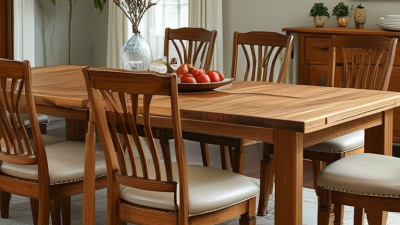

Compare Solid Wood Types, Grain, and Durability

Choosing solid wood starts with matching the species to daily use. Oak is relatively hard and has a pronounced grain that hides small marks. Maple usually looks smoother and resists dents well, though its pale surface can show stains. Walnut offers deep color and distinctive grain, often at a higher cost. Pine is lighter and softer, so chair edges may acquire dents sooner. Check the actual piece: wood varies, even within one species.

Grain affects appearance, but it does not tell the whole durability story. Look for cracks, loose knots, and grain that runs sharply across chair legs or table supports. These areas may be more vulnerable under repeated stress. Inspect joinery, too. Tight, stable joints matter as much as the tabletop species. Feel the edges and run a hand across the finish. Rough spots can signal rushed sanding. Not a guarantee, though.

Consider how the set will be used. Children, frequent meals, and heavy serving dishes call for sturdy construction and a finish that is easy to clean. No wood finish is immune to spills, so wipe liquid promptly. Compare samples in your kitchen’s light; a warm grain can look surprisingly orange beside cool cabinets. I would not choose by color alone. Also check whether the chairs feel steady on your floor, since even attractive wood can disappoint when the fit is wrong.

Inspect Joinery, Finish, and Overall Construction

A solid wood kitchen table and four chairs should feel steady before you judge their appearance. Check the joints where the legs meet the apron, the frame beneath the tabletop. Tight, even connections matter more than decorative plugs or smooth sales-floor lighting. Look closely. Gently rock each chair and press the table corners; movement or a sharp creak may point to loose joints. Screws should sit snugly, without splitting the wood around them. If you can, inspect the underside for cleanly fitted corner blocks and rough gaps.

Run your hand across the finish, especially along edges and near the legs. It should feel even, without sticky patches, raised grain, or sharp spots that could catch a sleeve. Then sit down. A chair should not wobble, and its seat should feel supported rather than springy. Check that the table’s top and legs meet cleanly, with no obvious gaps or glue residue. Solid wood can shift slightly with seasonal humidity, so tiny changes are not automatically defects. Still, a wide crack or a joint that opens under light pressure deserves a closer look. It is easy to focus on a beautiful grain pattern and miss a weak chair rung; take time to inspect each chair individually.

7 Tips for Choosing a Solid Wood Kitchen Table and 4 Chairs - Inspect Joinery, Finish, and Overall Construction

Tip What to Inspect Signs of Solid Construction Potential Red Flags
1. Confirm the wood construction Check the tabletop, legs, apron, and chair frames. Ask which parts are solid wood and whether any surfaces use veneer or engineered wood. The materials are clearly identified, and the main structural parts are made from solid wood as described. Vague material descriptions, concealed edges that look different from the surface, or a claim that the entire piece is solid wood when some parts are not.
2. Examine the joinery Look at the connections between the legs, apron, tabletop, and chair rails. Check underneath the table and chairs where joints are easier to see. Joints fit closely and sit flush. Traditional joints, such as mortise-and-tenon or dovetail joints, can be durable when well made; properly fitted screws and corner blocks can also provide support. Visible gaps, loose connections, cracked wood around fasteners, or joints that move when gently tested.
3. Test stability and strength On a level floor, gently press each table corner and chair back. Sit on each chair and shift your weight normally. The table does not rock, and the chairs remain steady without creaking excessively or shifting at their joints. Wobbling, twisting, loose legs, or pronounced movement where chair rails meet the legs.
4. Inspect the finish View the tabletop and chair surfaces in good light. Check edges, corners, undersides, and areas around joints for consistent coverage. The finish looks even, feels smooth, and has no obvious runs, peeling, rough patches, or exposed unfinished spots. Sticky areas, bubbling, flaking, rough edges, or finish buildup that hides gaps or defects.
5. Check the tabletop and grain Look across the top for flatness, open cracks, raised edges, and poorly matched boards. Ask how the tabletop is built and how wood movement is accommodated. Boards are joined securely, the surface is reasonably even, and the attachment allows for the natural expansion and contraction of solid wood. Large gaps, severe cupping, loose boards, or a tabletop rigidly fastened in a way that may restrict seasonal wood movement.
6. Check fit, comfort, and proportions Measure the room and compare table dimensions with the chair count. Sit in the chairs and check seat height, back support, and legroom. All four chairs fit comfortably around the table, with enough clearance to sit and move them without crowding. Chairs collide with table legs or each other, knees hit the apron, or seats feel unstable or uncomfortable during a short test.
7. Review care and practical details Ask how to clean the finish, whether the table needs periodic care, and whether the legs or chairs require assembly or adjustment. Care instructions are clear, the table sits level after setup, and hardware and assembly guidance are provided. Unclear cleaning advice, missing hardware, uneven feet, or no straightforward way to address ordinary assembly adjustments.

Choose Four Chairs for Comfort and Stability

A solid wood table needs four chairs that feel steady during ordinary meals, not just attractive in a showroom. Check the seat height against the table: roughly 25 to 30 centimetres between the seat and tabletop usually leaves room for legs. Sit for several minutes. Your feet should rest comfortably, and the chair edge should not press sharply behind your knees. Small details matter.

Tips: Sit before buying. Lean gently in each direction and check for rocking. Look for firm joints, even legs, and a backrest that supports you without forcing an awkward posture. If the chairs have arms, measure the gap beneath the table; otherwise, they may not slide in. Bring your table measurements, or at least write them down. Guessing is easy, and often wrong.

Consider who will use the chairs every day. A broad, padded seat may suit long dinners, while a lighter wooden chair can be easier to move around a compact kitchen. Test chairs on a hard floor and, if possible, on a rug like the one at home. Listen for creaks. A tiny wobble may seem harmless in a shop, but repeated shifting can become irritating. I would not choose a matching set on looks alone; comfort is personal, and my first impression can be misleading.

Match the Set to Your Kitchen Style and Care Needs

A solid wood table and four chairs should feel at home in your kitchen, not like a showroom set. Check cabinet fronts, flooring, and hardware before choosing a finish. Warm oak can soften white cabinets, while darker wood may anchor pale walls. In a compact kitchen, a round table can make it easier to move around chair backs. Measure the space with all four chairs pulled out, not just the tabletop.

Easy to miss.

Let the chair legs or back shape echo details already in the room. They do not need to match exactly; too much matching can make a kitchen feel staged. Sit in the chairs before buying, and check that they slide under the table without scraping nearby cabinets.

Comfort can surprise you.

Consider your care routine, too. Wipe spills promptly with a soft, slightly damp cloth, then dry the surface. Use coasters and trivets, and avoid harsh cleaners unless the care instructions allow them. Keep the table away from direct heat and strong sunlight, since wood can respond to changes in temperature and humidity. A delicate finish may look lovely, but crumbs and daily use can make its upkeep tiring. Choose what suits your real kitchen.