
Leave Your Message

How to Choose a Solid Wood Windsor Back Side Chair

Choosing a Solid Wood Windsor Back Side Chair is about more than finding a familiar silhouette. The curved back and slender spindles can make a room feel relaxed, but appearance alone cannot tell you how the chair will hold up. Wood species, joinery, finish, and proportions all matter. A clear buying guide should explain what to inspect and which details deserve closer questions.

When possible, sit in the chair before buying. Notice whether your feet rest comfortably on the floor and whether the back supports you without pressing into your shoulders. Check the legs on a level surface, then look beneath the seat for joints that appear secure and evenly fitted. Small gaps or a slight wobble are worth asking about, though handmade furniture may show subtle differences. Not every variation is a defect.

Ask the seller what “solid wood” means for that specific chair. Some chairs combine solid components with other materials, so confirm which parts are solid and how the finish is maintained. Also consider the room: a wide seat may crowd a small dining table, while a dark finish can show dust more readily. These practical checks are easy to overlook. I would not judge quality by weight alone; a heavy chair can still have weak joints. With a little scrutiny, you can choose a Windsor chair that suits your space, feels comfortable, and is built for regular use.
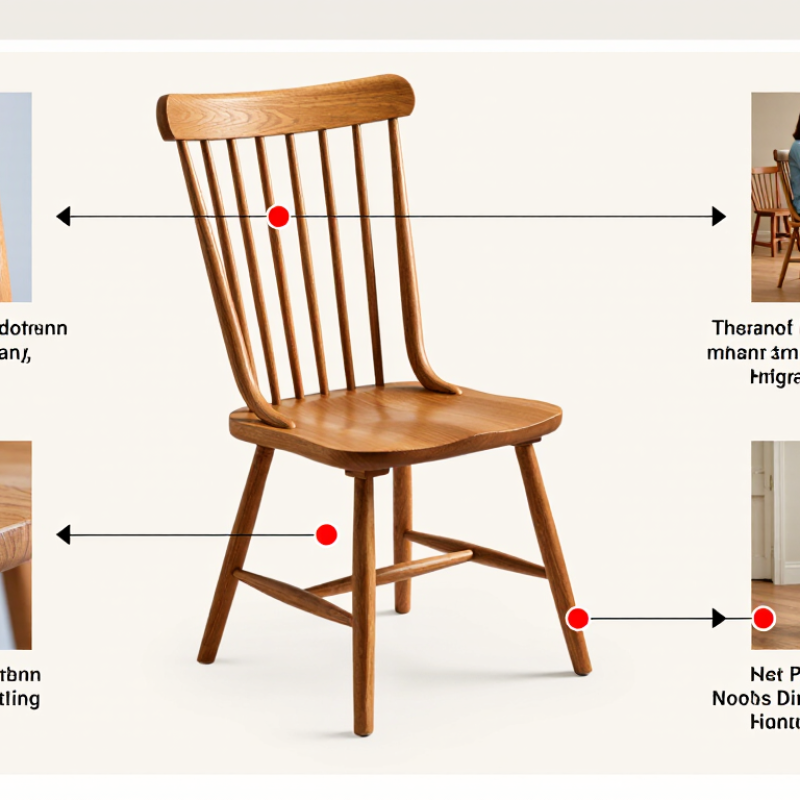
How to Choose a Solid Wood Windsor Back Side Chair

Identify Windsor Chair Anatomy: Bow, Spindles, Legs, and Solid-Wood Parts

A Windsor back side chair is built around a curved bow, the top rail that frames its fan of spindles. Check that the bow feels firmly joined to the back posts, with no visible gaps or movement. The spindles should sit evenly in the seat and bow, though small spacing differences can occur in hand-shaped parts. Look closely. A loose spindle may click when gently pressed, while a cracked one can show a fine line along its grain. Don’t mistake every mark for damage; wood grain varies naturally.

The legs support the seat and help keep the chair steady. Set it on a level floor and check for rocking, then inspect the leg-to-seat joints for looseness. Feel the seat’s underside and visible edges for solid wood, and look for grain that continues across the part. Feel the joints. A finish can hide details, so inspect areas beneath the seat where practical. There is a judgment call here: slight variations may reflect shaping, but uneven movement deserves attention. Sit carefully and notice whether the chair flexes or creaks; neither sound alone proves a defect, but both are worth checking further.

Check Wood Species, Joinery, and Moisture Testing Under ASTM D4442

A solid wood Windsor back side chair should feel firm at the joints, not merely heavy. Check the species on the product specification; “solid wood” alone does not identify its strength, movement, or repair needs. At the back spindles and leg-to-seat connections, look for clean, close-fitting joinery and even gaps. Gently press the chair from side to side. A faint creak deserves a closer inspection, though it does not prove a joint will fail.

Moisture matters because wood changes size as its moisture content shifts. The USDA Forest Products Laboratory’s Wood Handbook reports an average fiber saturation point near 30% moisture content, with variation among species. Below that point, moisture changes can cause shrinkage or swelling. Ask whether the maker tested the lumber under ASTM D4442, which describes direct moisture-content test methods, including oven drying. A useful record identifies the test method and sampled wood; a handheld meter reading alone is not the same as a documented ASTM test. A low reading is reassuring, not magic.

Tips: Compare the chair’s stated moisture content with the humidity where it will be used. Inspect the underside, too; unfinished joints and seat rails can reveal gaps or rough glue lines. I would not reject a chair over one tiny cosmetic flaw, but repeated looseness is harder to excuse.

Compare Seat Height with the 17–19-Inch Dining-Chair Industry Range

When choosing a solid wood Windsor back side chair, start by checking its seat height. Many dining chairs fall within the 17–19-inch range, measured from the floor to the top of the seat. Treat this as a useful reference, not a guarantee of comfort. Small differences matter.

Windsor chairs often have shaped wooden seats, so measure the seating surface rather than the highest point of the curved back. Place the chair beside your dining table and sit in it for several minutes. Your feet should rest flat, with your knees comfortably bent. If your thighs press against the table apron, the chair may be too tall, even when its measurement looks standard. The showroom test can be misleading.

Also account for cushions and floor coverings. A cushion raises your sitting position, while a thick rug can slightly affect how the chair sits. Check the table’s underside clearance, not just its stated height. A few inches of difference may change how easily you slide in and out. It is easy to focus on the graceful spindle back and overlook this practical fit. I would compare the chair’s seat height with a chair you already use comfortably, then test the measurements against your table.

How to Choose a Solid Wood Windsor Back Side Chair

Compare the seat height with the common 17–19-inch dining-chair range.

The highlighted bars fall within the common 17–19-inch range; the 16-inch and 20-inch bars sit outside it. These are reference points, not measurements of specific chairs. Measure from the floor to the top of the seat, and consider table height and comfort when choosing a chair.

Assess Safety and Durability Using EN 12520 and EN 1728 Test Methods

For a solid wood Windsor back side chair, EN 12520:2015 and EN 1728:2012 offer a useful evidence-based check. EN 12520 sets safety, strength, and durability requirements for domestic seating; EN 1728 describes the test methods. Ask for the chair’s actual laboratory report, not just a general claim of compliance. It should identify the standard editions, test configuration, applied forces, cycle counts, and recorded damage or deformation.

Look closely at the Windsor chair’s spindle joints, seat-to-leg connections, and back posts. These areas carry stress when someone leans back or shifts sideways. A test report should show how the tested specimen performed under the specified seat and back loading, and whether joints loosened, parts cracked, or the chair became unstable.

Small details matter. Check the joints.

A pass result applies to the tested design and setup; it does not prove every chair or every use condition is identical. Wood grain, moisture, and assembly can vary. I would still inspect the chair in person, because a report cannot reveal every loose spindle or rough-edged joint.

That limitation is easy to overlook.

Match Chair Dimensions, Load Rating, and Care Needs to Your Dining Space

Before choosing a Windsor side chair, measure the table apron, not just the tabletop. Aim for roughly 10–12 inches between the seat and the underside of the table, then check that arms or curved back spindles can slide underneath. A seat around 17–19 inches high suits many standard dining tables, but your own body and table height matter more than a catalog average. Leave enough room to pull the chair back without striking a wall. A few inches can change the whole feel.

Check the chair’s stated load capacity and ask how it was tested; appearance alone cannot confirm strength. ANSI/BIFMA X5.4 covers public and lounge seating, but it does not automatically certify every residential Windsor chair. Ask for the applicable test information. For care, remember that solid wood responds to indoor moisture. The USDA Forest Products Laboratory’s Wood Handbook (FPL-GTR-282, 2021) explains that wood shrinks or swells as its moisture content changes below the fiber saturation point, roughly 30 percent for many species. Keep chairs away from heaters and wipe spills promptly with a soft cloth. Avoid soaking joints. Finish instructions vary, and that detail is easy to overlook. A chair that fits the room but needs more care than your household can manage may not be the right choice.