
Leave Your Message

2026 How to Choose a Clear Acrylic Accent Chair?

Choosing a Clear Acrylic Accent Chair in 2026 requires more than chasing a transparent silhouette. The right piece must balance comfort, durability, scale, and visual lightness. It should disappear into a room without becoming forgettable.

I have examined acrylic chairs in compact apartments, reception areas, and dining corners. Small details changed the experience. A smoothly finished edge felt safer against bare legs. A wider seat supported relaxed sitting. Rubber floor protectors prevented slipping on polished tile. These practical observations matter more than glossy product photographs.

Charles Eames, a respected furniture designer, said, “The details are not the details. They make the design.” His words fit the Clear Acrylic Accent Chair perfectly. Clarity can expose every weakness, including cloudy plastic, visible scratches, uneven joints, and uncomfortable proportions. That is easy to overlook.

Material quality deserves careful attention. Look for thick acrylic, consistent transparency, reinforced connection points, and a stable base. Cast acrylic often offers better clarity than inexpensive alternatives, but manufacturing quality still varies. Do not assume a higher price guarantees better construction. That assumption needs questioning.

Room context matters too. Measure the chair beside its table, sofa, or desk. Leave enough space for movement and cleaning. Consider sunlight, because prolonged exposure may affect some finishes. Fingerprints will appear. Maintenance is part of ownership.

This guide explains how to compare styles, dimensions, materials, comfort, safety features, and long-term value. It also addresses common buying mistakes. A beautiful chair can still be the wrong chair. The best choice feels intentional, useful, and quietly convincing.
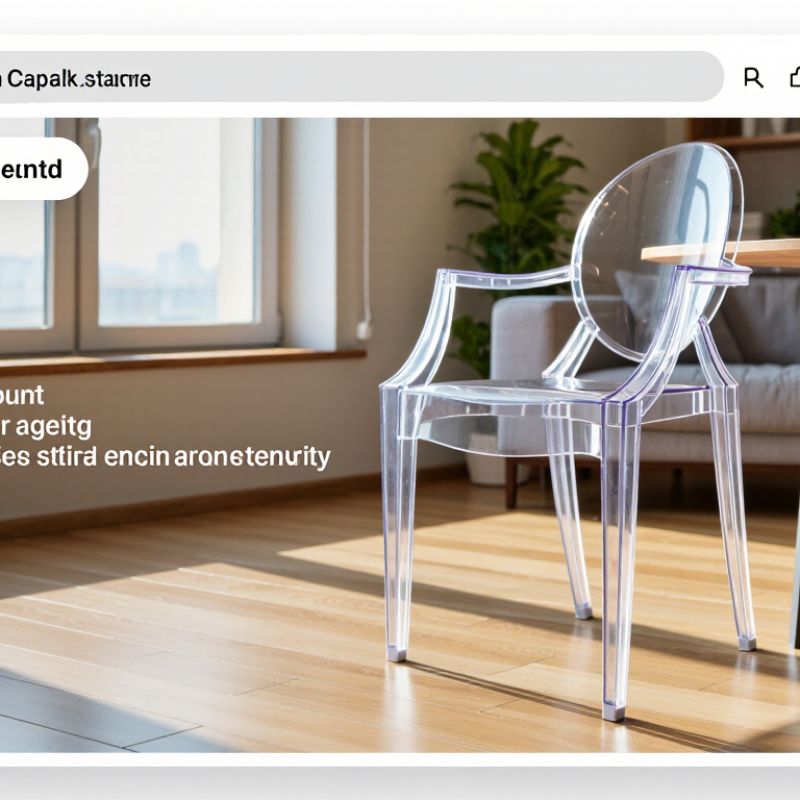
2026 How to Choose a Clear Acrylic Accent Chair?

Define 2026 Use Needs with Seat Height, Depth, and ANSI/BIFMA Load Ratings

2026 How to Choose a Clear Acrylic Accent Chair?

Define 2026 Use Needs with Seat Height, Depth, and ANSI/BIFMA Load Ratings

A clear acrylic accent chair should fit the activity, not only the room. For dining, measure the table first. A 17–19-inch seat height usually leaves comfortable leg clearance beneath standard tables. For a vanity or desk, compare the chair with the surface height. Feet should rest flat, with knees near hip level. Small differences matter.

Seat depth changes daily comfort. A 16–18-inch depth suits many occasional-use chairs, while deeper seats may support taller users. Leave roughly two fingers between the seat edge and the knee crease. I have seen attractive chairs fail here. The transparent frame cannot fix poor posture.

Check the published load rating carefully. ANSI/BIFMA X5.1-2017 includes demanding chair tests, including a commonly cited 275-pound seat-load test. That test measures product performance; it does not automatically equal a recommended user capacity. Ask for the manufacturer’s declared rating, test scope, and certification details. For shared seating, choose a margin above the heaviest expected user. Acrylic also reveals scratches, stress marks, and dust, so inspect edges and joints under bright light. This detail is easy to overlook.
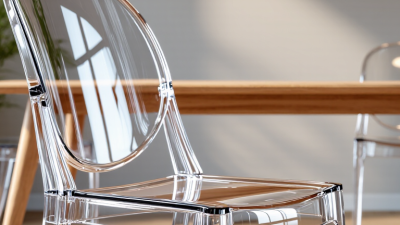
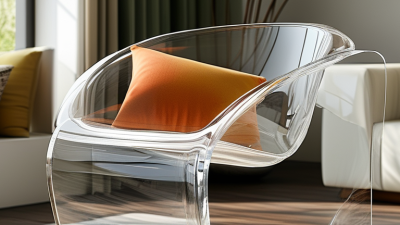
Confirm PMMA Sheet Grade and Thickness Against ASTM D4802 Specifications

2026 How to Choose a Clear Acrylic Accent Chair?

Confirm PMMA Sheet Grade and Thickness Against ASTM D4802 Specifications

A clear chair can look flawless and still be poorly specified. Start by confirming that the seat, back, and legs use PMMA acrylic sheet, not an unnamed clear plastic. ASTM D4802 provides requirements for acrylic sheet composition, appearance, dimensions, and performance. Ask for the exact sheet grade, nominal thickness, tolerance, and test report. Do not accept “premium acrylic” as a technical description.

Thickness matters, but thicker is not automatically safer. A 2024 Grand View Research report projects the acrylic sheets market to expand at about 5.7% annually through 2030. Growing demand makes documentation more important. For a dining chair, inspect the exposed edges, drilled holes, and bends. These areas reveal stress whitening, chips, or uneven machining. Compare the supplier’s declared PMMA grade with the applicable ASTM D4802 requirements. Request impact and tensile data when available. The standard alone does not certify the finished chair’s load capacity.

Look closely.

A practical inspection should include a stable base, smooth edges, and no cloudy zones around fasteners. Confirm the tested thickness at several points, because thin spots can develop during forming. I would also request a separate chair load-test report, since sheet compliance does not prove furniture safety. This is where my earlier assumption was incomplete: transparent appearance says very little about long-term strength. Consider sunlight, heat, repeated sitting, and cleaning chemicals before choosing the final design.

Assess Frame Stability Through ANSI/BIFMA X5.4 Seating Performance Tests

How to Choose a Clear Acrylic Accent Chair in 2026?

Assess Frame Stability Through ANSI/BIFMA X5.4 Seating Performance Tests

A clear acrylic chair should look light, but its frame must feel planted. I check joint movement, leg alignment, and floor contact before judging appearance. ANSI/BIFMA X5.4, the industry standard for lounge and public seating, evaluates stability, strength, durability, and structural integrity. Its test methods include repeated loading and impact conditions that imitate demanding daily use. The standard does not certify every chair automatically. A manufacturer must identify the tested model and configuration.

Ask for a current test report, not only a compliance statement. Check whether the report names the exact frame, seat, fasteners, and dimensions. Testing an armchair does not prove an armless version performs identically. That distinction matters.

BIFMA’s 2024 North American office furniture outlook reported shipment value declines in several commercial categories, increasing pressure to control replacement costs. A stable chair may reduce avoidable returns, repairs, and premature disposal. Yet laboratory testing cannot predict every home environment. Uneven tile, loose screws, and repeated sideways leaning can still create instability. I would inspect the underside personally, especially around transparent joints. Small flaws show quickly. So does poor assembly.

Look for test references to ANSI/BIFMA X5.4-2020, clear load ratings, and installation instructions. A qualified independent laboratory adds credibility. Ask questions. Vague paperwork deserves caution.

2026 How to Choose a Clear Acrylic Accent Chair?

Assess frame stability by comparing the chair’s structural response with common ANSI/BIFMA X5.4 seating-performance load categories. The reference loads below are shown in pounds-force and newtons; exact requirements may vary by chair type and standard edition.

How to use this chart: During evaluation, inspect welds, fasteners, joints, legs, and acrylic-to-frame connections for permanent deformation, loosening, cracking, or instability after each applicable test. Passing a single load test does not by itself confirm complete ANSI/BIFMA compliance.

Compare 18–20-Inch Seat Heights, 16–18-Inch Depths, and Base Clearance

A clear acrylic accent chair should look light, but its measurements must support real sitting. An 18–20-inch seat height usually suits dining tables and average living-room seating. The U.S. Army’s ANSUR II survey measured 6,068 adults and showed wide variation in popliteal height, or floor-to-knee height. That variation matters. A 20-inch seat may feel comfortable for taller users, yet it can leave shorter users dangling their feet. I would test the chair with both feet flat, not judge it by appearance alone.

Seat depth creates another practical trade-off. A 16–18-inch depth keeps the chair compact and helps users maintain back contact. Deeper seats may appear generous, but they can press behind shorter knees. ANSI/BIFMA G1-2013 emphasizes fit, stability, and user interaction, although it does not prescribe one perfect residential dimension. Use its principles alongside the ANSUR II data. Measure from the front edge to the back cushion, not simply the outer frame.

Base clearance deserves attention with acrylic furniture. Leave enough space beneath the seat for easy cleaning and visible floor area, while keeping the base stable. A clearance of roughly 6–8 inches can create a floating effect, but it may expose dust more clearly on transparent material. A narrow metal base can also feel less secure than expected. I still measure twice. Reflections can disguise proportions in photographs, and my first choice may look smaller in a real room. Sit for ten minutes before deciding. Comfort is harder to edit later.

Check UV, Scratch, Cleaning, and Sustainability Claims Using ASTM, FTC, and EPD Data

How to Choose a Clear Acrylic Accent Chair in 2026

A clear acrylic chair can look bright near a sunny window. Its surface, however, may yellow, haze, or develop fine scratches. Ask for UV test evidence, not only “UV resistant” wording. ASTM G154 or related accelerated-weathering methods can show exposure conditions and changes. Check the test duration, lamp type, temperature, and measured color shift. A report without the tested material and thickness tells you little.

Scratch claims also need careful reading. ASTM D3363 may assess pencil hardness, while ASTM D1044 can evaluate abrasion resistance. Neither test perfectly recreates keys, pet claws, or a metal belt buckle. Cleaning performance is equally practical. Look for tested resistance to common cleaners, and follow the care sheet. A soft microfiber cloth and diluted mild soap are safer than abrasive pads. Test an unseen area first. I have learned that “easy to clean” can still mean visible smears under strong light.

For sustainability claims, request a current Environmental Product Declaration. An EPD should identify its product category rules, functional unit, life-cycle stages, and verification status. Compare EPDs only when their scopes match. FTC guidance helps assess environmental marketing language, but it is not a product certification. Ask whether recycled content is post-consumer or factory scrap. My checklist is useful, but not flawless. Manufacturing changes can make an old report less relevant. Keep the documents, inspect the chair in daylight, and question claims that sound unusually perfect.