Leave Your Message

China Top 10 Suspended Gypsum Ceiling Suppliers?

Choosing among China’s top 10 Suspended Gypsum Ceiling suppliers requires more than comparing prices. A ceiling may look smooth in a showroom, yet perform poorly after installation. Moisture, sound control, fire resistance, access requirements, and frame stability all matter.

Joseph G. Allen, a Harvard building scientist, has said, “The best buildings are not only beautiful, but also healthy, safe, and resilient.” His statement applies directly to ceiling selection. A reliable Suspended Gypsum Ceiling supplier should provide tested materials, clear technical data, consistent board quality, and practical installation guidance. Certifications help, but they do not replace factory experience or project references.

This guide reviews ten Chinese suppliers through a buyer-focused lens. The comparison considers product range, gypsum board performance, suspension systems, acoustic solutions, customization, export capability, and after-sales support. It also looks at details that are easy to overlook, such as edge finishing, screw spacing, corrosion protection, and packaging protection during shipment.

Small details matter.

Some suppliers specialize in large commercial projects. Others are better suited to hotels, offices, hospitals, or residential interiors. A few may offer impressive catalogs but limited evidence of long-term performance. That weakness deserves attention.

No ranking is permanently perfect. Supplier capacity, material costs, certifications, and regional service can change. Buyers should verify current documents, sample quality, production capacity, and installation recommendations before signing a contract. The strongest choice is not always the largest manufacturer. It is the supplier that matches the project’s technical demands, budget, climate, and accountability expectations.
China Top 10 Suspended Gypsum Ceiling Suppliers?

Definition and Role of Suspended Gypsum Ceilings

A suspended gypsum ceiling is a non-structural ceiling system hung below the main slab or roof. It usually combines gypsum panels, metal channels, hangers, joint treatment, and an accessible service cavity. This cavity conceals wiring, ducts, sprinklers, and ventilation equipment. It also allows technicians to reach services without damaging the primary structure.

Its role is both practical and visual. Gypsum panels create a clean, level surface and can improve fire resistance when tested as a complete assembly. Perforated or backed panels may reduce sound reflection in offices, classrooms, and hotel corridors. The 2023 Global Status Report for Buildings and Construction states that buildings consumed 34% of global energy and produced 37% of energy and process-related emissions in 2022. A ceiling does not solve that problem alone. However, accurate detailing around lights, ducts, and insulation can reduce unwanted air leakage and support efficient building operation.

On a real project, supplier quality affects more than appearance. Check panel thickness, moisture resistance, fire-test documentation, suspension load data, and installation tolerances. ASTM and EN test references should be traceable, not merely printed on a quotation. Site teams often discover uneven slabs, congested services, or poor access planning. Small problems become visible shadows across the ceiling. Quiet matters. A better design may need more access panels, stronger hangers, or a different acoustic backing. The cheapest specification is not always the most reliable one.


Key Criteria for Evaluating Chinese Gypsum Ceiling Suppliers

Choosing among China’s top 10 suspended gypsum ceiling suppliers requires more than comparing catalog prices. The USGS Mineral Commodity Summaries 2025 estimates global gypsum mine production at about 150 million metric tons in 2024. This scale supports strong material access, but it does not guarantee consistent ceiling quality. Request test reports for board density, moisture resistance, fire performance, and dimensional stability. Check whether results follow recognized standards such as ASTM C1396 or EN 520.

Factory capability should be verified through evidence, not polished presentations. Review ISO 9001 certification, production records, batch traceability, and independent inspection files. ISO’s 2023 Survey reported more than 1.5 million ISO 9001 certificates worldwide, so certification alone is not enough. Ask to inspect the actual plant. Look at edge damage, dust control, storage height, and packaging strength. Small details matter. A damaged corner can delay an entire ceiling grid installation.

Compare more than the factory quote. Evaluate lead time, replacement policy, export packing, technical drawings, and communication during a sample order. Request samples from different production batches when possible. One sample may look excellent. It may not represent regular output. Grand View Research identifies continued global growth in gypsum board demand, driven partly by faster interior construction and fire-resistant systems. Yet demand growth can pressure capacity and delivery schedules. I would also score suppliers by project references, installer feedback, and response speed. My own judgment can still be imperfect; a neat audit cannot fully predict performance after months of humidity and site handling.

China’s Top 10 Suspended Gypsum Ceiling Suppliers

China’s Top 10 Suspended Gypsum Ceiling Suppliers serve offices, hotels, hospitals, and residential developments worldwide. Their products commonly combine gypsum panels, galvanized steel frames, access hatches, and acoustic finishes. Buyers should inspect factory capacity, moisture resistance, fire-test documentation, and installation support before comparing prices.

The U.S. Geological Survey estimated global gypsum mine production at roughly 150 million metric tons in 2023. This supports continued material availability, but supply volume does not guarantee consistent ceiling quality. Grand View Research’s gypsum board market analysis projects steady growth through 2030, driven by urban construction and stricter building-performance requirements. That trend increases demand for suppliers with documented quality systems and stable export experience.

A practical shortlist should examine panel density, edge accuracy, surface flatness, and corrosion protection. Request independent test reports, not only laboratory claims. Ask for recent project references in similar climates. Small details matter. Packaging damage remains an underestimated risk during long-distance shipping. Factory audits can reveal storage problems, weak batch control, or rushed inspection procedures. Some supplier rankings look convincing, yet their scoring methods may remain unclear. Buyers should therefore verify production records, lead times, warranty terms, and local code compatibility before selecting among China’s leading ten suppliers.

China Top 10 Suspended Gypsum Ceiling Suppliers? - China’s Top 10 Suspended Gypsum Ceiling Suppliers

Comparison of typical product capabilities, technical specifications, compliance options, and export service coverage.

Market Rank Supplier Profile Typical Manufacturing Cluster Common Panel Size Common Thickness Product Options Suspension System Testing & Compliance Options Main Export Markets
1 Supplier Profile A East China coastal manufacturing belt 600 × 600 mm 7–12.5 mm Regular, moisture-resistant, fire-resistant, acoustic perforated Exposed T-grid and concealed grid GB/T, ASTM, EN test documentation available by project Southeast Asia, Middle East, Africa
2 Supplier Profile B North China industrial region 595 × 595 mm 9–12.5 mm Standard, impact-resistant, fire-rated, vinyl-faced 24 mm and 15 mm exposed T-grid Fire reaction, dimensional stability, and load testing Central Asia, Europe, Middle East
3 Supplier Profile C Pearl River Delta 600 × 600 mm 7–15 mm Moisture-resistant, washable, laminated, mineral-textured Exposed T-grid with seismic accessories Moisture absorption, fire performance, and corrosion testing North America, Southeast Asia, Australia
4 Supplier Profile D Central China production zone 600 × 600 mm 9.5–12.5 mm Regular, acoustic, perforated, high-density gypsum panels Concealed grid and clip-in system Acoustic absorption, fire-resistance, and product composition reports South Asia, Africa, Gulf countries
5 Supplier Profile E Southwest China manufacturing area 595 × 595 mm 8–12 mm Economy, moisture-resistant, decorative-faced, lay-in panels Exposed T-grid, 15/24 mm flange options Basic fire, moisture, edge-strength, and dimensional tests Southeast Asia, Latin America, Africa
6 Supplier Profile F Yangtze River Delta 600 × 600 mm 9–15 mm Acoustic perforated, fleece-backed, fire-resistant, custom colors Concealed grid and hook-on system NRC-related acoustic reports, fire tests, and formaldehyde testing Europe, East Asia, Middle East
7 Supplier Profile G Bohai Rim industrial region 600 × 600 mm 9.5–12.5 mm Fire-rated, impact-resistant, standard white, custom edge profiles Exposed and concealed suspension systems Fire classification, impact resistance, and zinc-coating inspection Middle East, Eastern Europe, Central Asia
8 Supplier Profile H Fujian and coastal South China 595 × 595 mm 7–12.5 mm Moisture-resistant, cleanable, standard lay-in, decorative surface Exposed T-grid and corrosion-resistant grid Humidity resistance, surface coating, and edge-load testing Southeast Asia, Pacific region, Africa
9 Supplier Profile I Northwest China industrial corridor 600 × 600 mm 9–12.5 mm Standard, fire-resistant, acoustic, high-density panels Exposed T-grid and seismic suspension accessories Fire, load, corrosion, and dimensional stability documentation Central Asia, Russia, Middle East
10 Supplier Profile J South China interior-materials cluster 595 × 595 mm 8–12 mm Economy, standard white, moisture-resistant, small-batch custom finishes Exposed T-grid systems Routine dimensional, surface, moisture, and packaging inspection South Asia, Southeast Asia, Africa

Data note: The specifications shown are typical ranges used in China’s suspended gypsum ceiling market. Actual panel dimensions, thicknesses, performance classifications, testing documents, minimum order quantities, and export coverage should be verified against the supplier’s current technical datasheet and project quotation.

Product Range, Standards, and Manufacturing Capabilities

China’s top ten suspended gypsum ceiling suppliers differ in product depth and factory control. Strong suppliers usually offer standard gypsum boards, moisture-resistant panels, fire-rated panels, metal grids, access panels, and acoustic options. Some also provide curved ceilings and perforated finishes for offices, hotels, and transport interiors.

Product standards need careful checking. EN 13964 covers suspended ceilings and related performance requirements. ASTM C635 and ASTM C636 address metal suspension systems in many international projects. Chinese projects may reference GB/T 9775 for gypsum board and separate fire-rating requirements. Ask for current test reports, batch traceability, and installation tolerances. A certificate alone is not enough. Testing must match the delivered product.

Manufacturing capability becomes visible on the factory floor. Look for automated roll-forming lines, controlled board drying, edge inspection, and humidity testing. A capable supplier should explain load ratings, corrosion protection, panel thickness, and ceiling access limits without vague language. Request samples with cut edges, coating details, and grid connections. I would also inspect packaging and pallet stability. Small transport damage can create expensive rework. Catalogs often look complete, but some suppliers outsource critical components. That deserves open discussion. Lead times, replacement policies, and technical drawings should be written clearly. Mistakes still happen. The reliable partner is the one that records them, investigates the cause, and improves the process.

China Top 10 Suspended Gypsum Ceiling Suppliers? – Product Range, Standards, and Manufacturing Capabilities

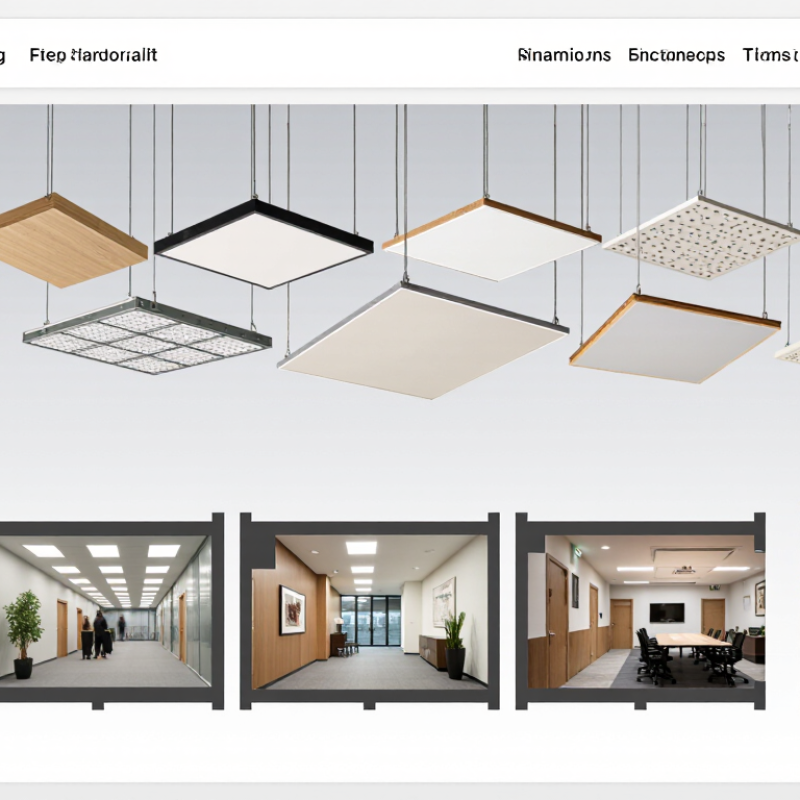
Common nominal gypsum ceiling panel formats used when comparing supplier product ranges. The dimensions reflect widely specified market formats; actual availability depends on project requirements and factory tooling.

Suspended gypsum ceiling systems are commonly evaluated against EN 13964 for suspended ceilings, ASTM C635 and ASTM C636 for metal suspension systems, and ASTM C1396 for gypsum board products. Manufacturing capabilities may include standard and moisture-resistant boards, perforated acoustic panels, fire-rated assemblies, CNC cutting, edge forming, and integrated suspension-system production.

How to Select the Right Supplier for Your Project

Selecting among China’s top suspended gypsum ceiling suppliers requires more than comparing prices. A low quotation may hide thinner panels, weak edges, or inconsistent surface quality. Define your project needs clearly, including ceiling area, room humidity, acoustic targets, fire classification, and panel dimensions. Do not rank suppliers by online visibility alone.

Ask for recent samples and technical data sheets. A serious supplier should explain the gypsum core, paper facing, suspension system, and installation tolerances. Request test reports from accredited laboratories, not only translated marketing claims. Check whether production follows documented quality procedures. Factory photographs help, but an independent audit gives stronger evidence. References from similar commercial projects are also valuable.

Test the sample yourself. Measure thickness, inspect the edges, and observe how easily the panel chips during cutting. Check the grid connection with your specified framing system. Ask about batch inspection, packaging, replacement procedures, and delivery records. Small details matter on site. A single damaged pallet can delay several trades.

Review the contract carefully. Confirm product codes, acceptable tolerances, moisture protection, payment stages, and inspection rights before shipment. Keep communication in writing. Some suppliers respond quickly before payment, then become slower during production. That risk deserves attention. No supplier is perfect, and my own evaluations sometimes rely too heavily on polished samples. Rechecking production batches and requesting independent evidence can expose weaknesses early. A reliable partner accepts reasonable questions and provides clear answers without pressure.