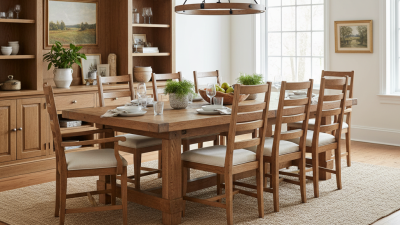
China Top Study Table Foldable With Chair Suppliers?
China has become a major sourcing base for compact educational furniture, including the Study Table Foldable With Chair. The opportunity is practical: one unit can create a desk, seat, and storage area in a small bedroom or classroom. It also creates questions about stability, comfort, and long-term safety.
Grand View Research reported that the global furniture market reached approximately USD 516.66 billion in 2022. Its industry analysis also identifies space-saving and multifunctional furniture as important growth directions. Meanwhile, the China National Furniture Association continues to highlight manufacturing upgrades, export quality, and intelligent production within China’s furniture sector. These reports provide useful market context, but they do not replace supplier-level verification.
Professor Peter Barrett, lead author of the University of Salford’s HEAD Project, stated, “The whole school environment, not just the classroom, can have a significant impact on learning.” His observation matters here. A narrow desktop, sharp edge, or unstable folding joint can affect daily use more than attractive product photos suggest.
This guide examines China’s top Study Table Foldable With Chair suppliers through a buyer’s lens. It considers materials, folding-cycle testing, ergonomic dimensions, child-safe edges, coating quality, packaging, and export experience. Some supplier claims may look impressive. They may still need independent proof. A strong factory should provide samples, inspection records, load-test results, and clear after-sales terms. The ideal choice is not always the cheapest. Sometimes, a slightly heavier frame offers better stability and fewer complaints. It is worth checking twice.
Product Scope: Foldable Study Table-and-Chair Sets for Children and Students
China Top Study Table Foldable With Chair Suppliers?
Product Scope: Foldable Study Table-and-Chair Sets for Children and Students
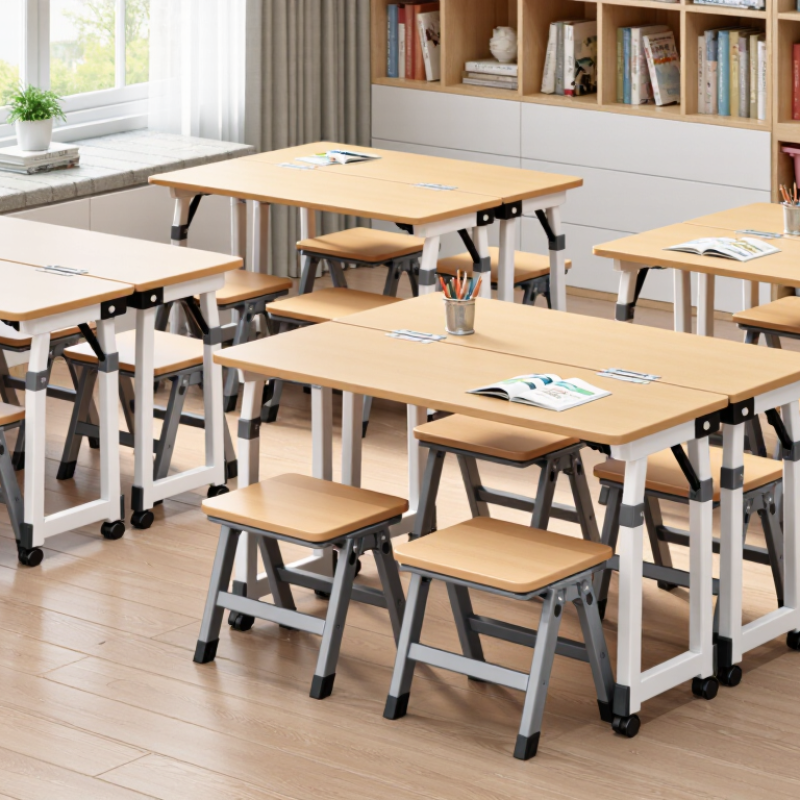
Foldable study table-and-chair sets support reading, drawing, homework, and online lessons in compact rooms. A practical set should fold smoothly without trapping small fingers. Rounded corners, stable legs, and non-slip feet matter during daily use. I recommend checking the open dimensions, folded thickness, and recommended user height before placing an order. These details reveal whether the furniture fits a child’s room or a crowded classroom.
Experienced suppliers should provide material specifications, load testing records, and clear assembly instructions. Look for durable panels, rust-resistant hardware, and washable surfaces. Adjustable height is valuable because children grow quickly. A chair should support an upright posture without forcing the knees too high. Sample testing can expose loose hinges, uneven edges, or unpleasant odors that photos may hide. Request inspection photos from multiple angles.
No folding design is perfect. Hinges may loosen after repeated use if quality control is weak. A slightly heavier frame can improve stability, but it may reduce portability. That trade-off deserves honest discussion. Suppliers with dependable production experience usually explain these limitations clearly. They should also confirm carton protection, replacement parts, inspection procedures, and delivery terms in writing. Small details matter here. A reliable set should feel steady on the floor, fold neatly, and remain comfortable through ordinary school routines.
Factory Evaluation: 20–45-Day Lead Times, QC Systems, and Certifications
China’s foldable study table and chair suppliers often quote 20–45 days for production. That range needs careful checking.
A reliable factory separates sampling, material preparation, assembly, and final packing. For a standard order, production may take 20–30 days. Custom colors, printed cartons, or new molds can extend the schedule to 45 days. Ask for a dated production plan, not only a verbal promise. I also check whether hinges, locking pins, and chair joints arrive from approved sources. Small delays often start there.
Quality control should cover more than visual inspection. Workers can check tabletop dimensions, edge finishing, screw torque, and folding resistance during assembly. A practical factory may perform load tests on the table and repeated folding tests on hinges. Carton drop tests can reveal weak corners before shipment. One factory may pass appearance checks but still overlook a slightly loose locking pin. That detail matters in daily use.
Certification documents require equal attention. Verify the certificate holder, factory address, product scope, testing date, and validity period. ISO-based quality systems can support process control, but they do not automatically prove product safety. Request recent test reports for materials, coatings, stability, and applicable market standards. Samples should match mass production. I have seen attractive samples hide inconsistent welds in later batches. Pre-shipment inspection remains necessary, even when the factory provides complete paperwork.
Product Testing: 75 kg Load Ratings, Adjustable Heights, and 20,000-Cycle Hinges
China Top Study Table Foldable With Chair Suppliers?
A reliable supplier should show test records, not only polished photos.
For a foldable study table, the 75 kg load rating needs a documented static-load method. The load should remain centered for at least 24 hours, with no cracked joints or permanent bending. A third-party laboratory can record deflection before and after testing. This approach reflects durability principles used in ISO 7170 furniture testing.
Height adjustment also requires practical checks.
Each locking position should hold under repeated downward pressure. A suitable range may support children from roughly 100 to 160 centimeters tall, but body proportions still vary. EN 12520:2024 emphasizes strength, stability, and durability for seating furniture. Suppliers should therefore test the chair separately, including front-edge loading and sideways movement.
Small details matter. A loose knob can ruin a good frame.
Hinges deserve harder testing than a showroom demonstration.
At least 20,000 opening-and-closing cycles can reveal pin wear, plastic fatigue, and uneven folding. The test should use the table’s actual weight, not a lighter laboratory substitute. Results should include cycle speed, applied load, and failure observations. Industry quality systems commonly require traceable records, calibrated equipment, and sample identification. However, one test sample proves very little. Three or more samples offer stronger evidence, though variation may still exist. Suppliers should publish failures honestly. That imperfect record can be more trustworthy than a flawless claim.